
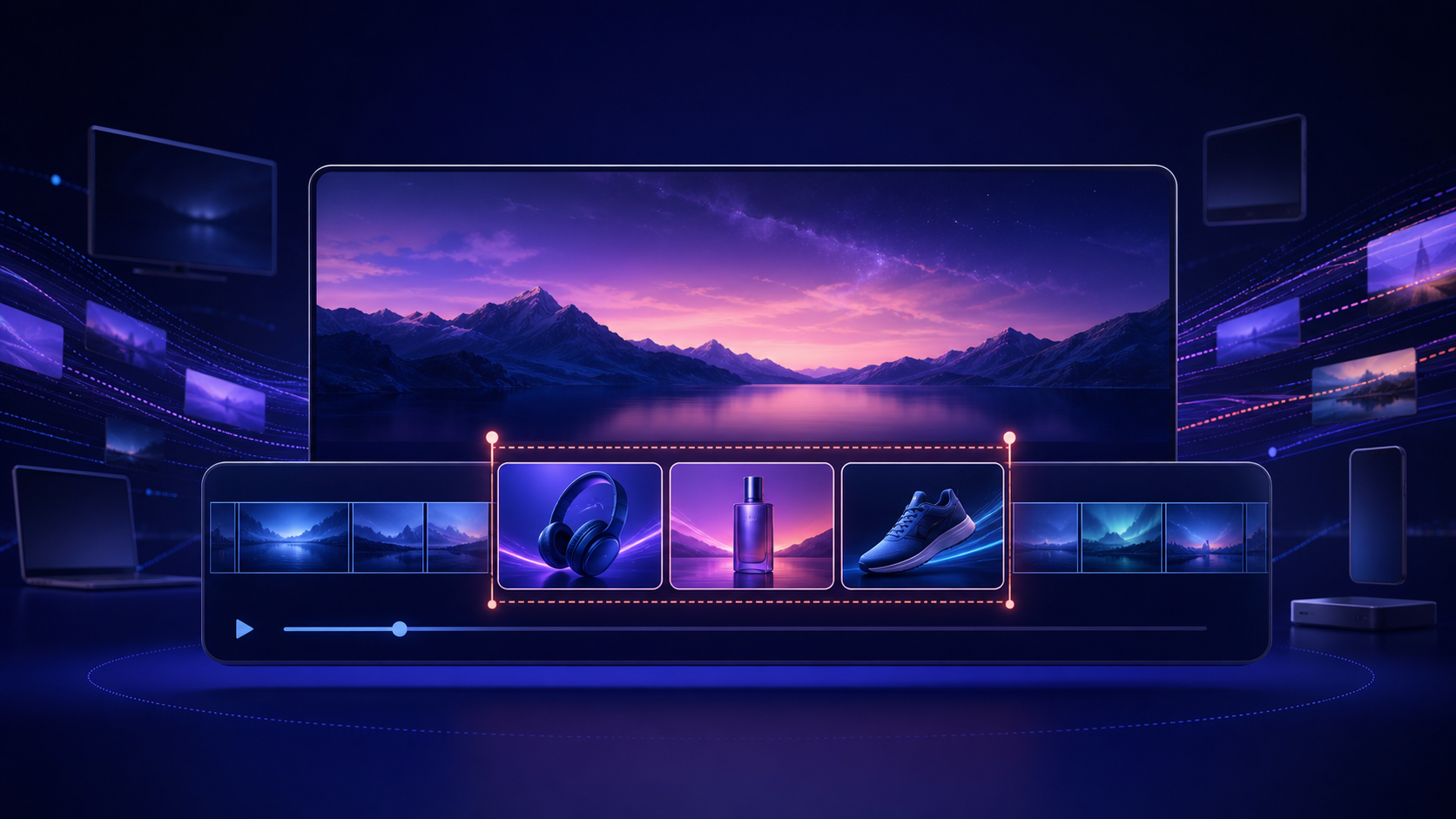
A viewer reaches a mid-roll break in your streaming app. One ad repeats, the next stalls, and a black frame appears before the program resumes. The break technically delivered impressions, but it also gave the viewer a reason to leave.
Understanding what is podding helps product, engineering, and ad-operations teams treat that break as one coordinated experience instead of several unrelated ad calls. A well-designed pod can improve fill and placement control while protecting playback quality—but only if sequencing, fallback, measurement, and frequency rules work together.
What is podding in streaming apps?
Podding, usually called ad podding, is the practice of grouping multiple ads so they play in sequence during one streaming-video ad break. An ad pod is the whole group; each individual commercial occupies an ad slot inside it.
The format brings a familiar television-style commercial break to OTT and connected-TV delivery, including AVOD, live streams, FAST channels, BVOD (broadcaster video on demand), and streaming services operated by MVPDs. It can be used for pre-roll, mid-roll, or post-roll inventory, though it is generally most useful when the content is long enough to justify a multi-ad interruption. the IAB Tech Lab VAST specification traces the format to pod support in VAST 3.0 and explains why long-form VOD and live content are its natural fit.
| Term | Meaning | Example |
|---|---|---|
| Ad break | The interruption reserved for advertising | A 90-second mid-roll at minute 18 |
| Ad pod | The ordered group scheduled into the break | Four ads totaling up to 90 seconds |
| Ad slot | One position inside the pod | The first 15-second placement |
| Ad buffet | Stand-alone fallback ads that may replace failures | A 15-second backup creative |
That distinction matters. A pod is not merely “several ads near one another.” It carries shared constraints such as total duration, number of ads, competitive separation, and ordering.
How podding works from request to playback
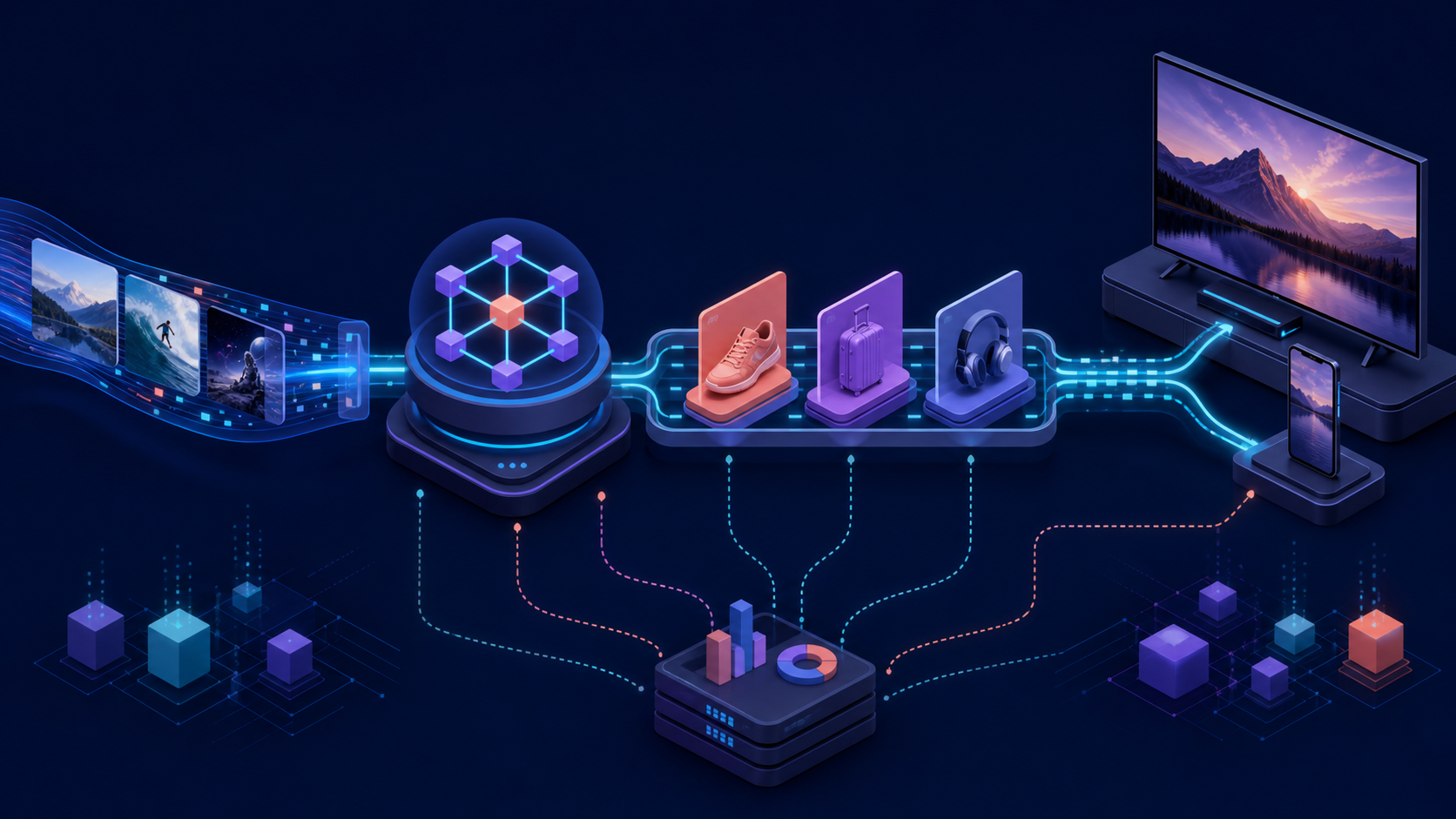
To the viewer, podding looks like one continuous break. Behind the player, several systems coordinate the result:
- The stream signals an ad opportunity. A manifest, marker, or player rule identifies a pre-roll, mid-roll, or post-roll break and its available duration.
- The player or insertion service requests inventory. The request describes constraints such as break length, acceptable creative durations, device, content, and privacy-safe targeting context.
- The ad server builds the pod. Eligible campaigns compete for slots. The decisioning layer applies pacing, frequency caps, position rules, category exclusions, and duration limits.
- The response defines order and fallback. In VAST, ads with a
sequenceattribute form a pod and must use unique sequence values. Non-sequenced ads can act as an ad buffet. - The player or stitcher inserts the ads. Client-side ad insertion switches the player into ad playback; server-side ad insertion modifies the stream manifest so content and ads arrive through a more unified path.
- Playback events are measured. Impression, start, quartile, complete, click, error, and exit signals flow to the relevant analytics and ad systems.
The IAB Tech Lab VAST 4.3 specification says sequenced ads should play in numerical order. It also allows a player to move to a stand-alone fallback or the next ad when one creative fails, and to truncate the end of a pod when ads cannot fit a live break or violate the player’s limits.
One full-pod request can also reduce coordination overhead. Google Ad Manager’s optimized-pod documentation contrasts multiple ads and total-pod duration in one optimized request with single-ad requests, while enforcing creative fit and supporting ad-buffet fallback.
What podding structure should a streaming app use?
There are three common structures. The right choice depends on how fixed the break must be and how much flexibility the auction needs.
Structured pods
A structured pod has a defined number of slots, usually with fixed lengths. A 60-second break might require four 15-second ads. This makes scheduling and position-based pricing straightforward, but a missing creative can leave unfilled time unless fallback is strong.
Use structured pods when broadcast timing, contractual positions, or a predictable viewer experience matters more than auction flexibility.
Dynamic pods
A dynamic pod defines the break’s total duration but allows the decisioning system to combine creatives of different lengths. A 90-second opportunity could contain three 30-second ads, six 15-second ads, or another valid mix.
Dynamic pods give the auction more ways to fill a break, but require exact duration controls. OpenRTB 2.6 separates whole-break duration from individual-slot constraints and includes fields for pod identity, pod position, and precise acceptable creative lengths—especially important where a mismatch would create dead air. See the IAB Tech Lab OpenRTB 2.6 specification.
Hybrid pods
A hybrid pod reserves one or more structured positions and lets the remaining time fill dynamically. For example, a premium first slot may be fixed at 30 seconds while the remaining 60 seconds accept a valid mix.
The Current’s explanation of structured, dynamic, and hybrid pods highlights the trade-off: fixed positions improve certainty, while flexible portions can make the remaining break easier to monetize.
What podding changes for revenue and viewer experience
Podding can create value, but the mechanism is not the outcome. Teams still need to tune it.
- More coherent auctions: Buyers can understand whether they are bidding on a full pod or a specific position. Publishers can value first or last slots differently.
- Better use of break duration: A pod-aware decision engine can evaluate several eligible combinations against the total time available.
- Creative separation: Deduplication and competitive-exclusion rules can prevent the same creative—or direct competitors—from appearing next to each other.
- Lower request overhead: A coordinated request can avoid making an independent decision for every slot. That can reduce latency, but it does not eliminate slow creatives, wrapper chains, or poor CDN delivery.
- Consistent controls: Pod-level caps make it easier to express maximum ads, maximum non-skippable time, and fallback behavior.
The main risk is over-optimization for impressions. A fully filled break can still be a bad break if it is too long, repetitive, or badly placed. Short-form clips often need one ad, not a miniature television break. Subscription-heavy products may need lighter loads for paying users, while live streams need stricter timing than on-demand playback.
How to implement podding without wrecking playback
Start with the viewer constraint, then configure monetization inside it.
1. Set a break budget
Define maximum pod duration, maximum number of ads, acceptable creative lengths, skip behavior, and whether the rules differ by content length or subscription tier. Do not let auction fill silently determine the experience.
2. Choose the insertion architecture
| Approach | Best fit | Main engineering concern |
|---|---|---|
| Client-side insertion (CSAI) | Interactive ads and players with mature ad-SDK support | Player transitions, blockers, device variance, and client beacon reliability |
| Server-side insertion (SSAI) | Broadcast-like playback across fragmented devices | Manifest personalization, creative conditioning, and server/client measurement alignment |
| Server-guided insertion (SGAI) | Teams wanting server orchestration with player-controlled ad assets | Player support, caching behavior, and tracking-mode differences |
In an SSAI flow, the insertion service receives a content request, calls an ad decision server, and returns a personalized manifest containing compatible ad media. AWS’s MediaTailor flow also shows why creative conditioning matters: an incompatible asset may be skipped while it is prepared for a later request.
3. Make failure an explicit path
Test empty responses, timeouts, VAST wrapper limits, unsupported codecs, duration mismatch, malformed tracking URLs, and a viewer joining midway through a live break. Decide whether each failure should use a buffet ad, advance to the next slot, shorten the pod, or return to content.
4. Enforce diversity
Deduplicate by a stable creative identifier, not only by filename. Add category and advertiser separation, then test household and user-level frequency caps across devices. Google’s optimized pods, for example, prevent the same line item from serving multiple times in one optimized pod; your full experience still needs rules across pods and sessions.
5. Validate the complete break
Test the pod as a sequence on every major device class. Verify startup time, transitions, audio level, captions, aspect ratio, click behavior, background/foreground recovery, and return to content—not just whether each ad can play alone. If your app also uses standalone in-stream placements, this in-stream advertising implementation guide covers the wider format and attribution context.
Measure podding as a funnel, not an impression count
Instrument the break, pod, slot, and creative as distinct objects. At minimum, capture:
- ad-request success and pod fill rate;
- requested versus returned versus played duration;
- time to first ad frame and transition latency;
- start, quartile, completion, skip, error, and fallback rate by slot;
- duplicate-creative and competitive-separation violations;
- exits during the break and content-resume success;
- clicks, app opens, installs, and downstream conversion where relevant.
Watch the shape of the pod. A high completion rate for slot one and a steep fall by slot four is more actionable than a blended completion average. Compare pod length and ad count against session abandonment, return rate, and revenue per viewing hour; revenue per break alone can reward an experience that erodes the audience.
If an ad click is meant to open or install your mobile app, the pod ends at the click but measurement does not. Deeplinkly’s OTT deep linking workflow can preserve campaign context through a deep or deferred deep link, route the viewer to the intended screen, and connect the acquisition touchpoint with install and downstream events; use that alongside the ad server’s playback data rather than as a replacement for it.
Frequently asked questions
What is ad podding?
Ad podding groups multiple video ads and plays them in sequence during a single pre-roll, mid-roll, or post-roll break. The pod defines shared limits such as order, total duration, ad count, and fallback.
What is the difference between an ad pod and an ad slot?
An ad pod is the complete group of ads in one break. An ad slot is one position inside that group, such as the first 15-second commercial in a 60-second pod.
Does ad podding require server-side ad insertion?
No. Ad pods can be delivered with client-side, server-side, or server-guided insertion. The best choice depends on device support, interactive requirements, latency goals, manifest infrastructure, and how your stack sends tracking beacons.
When should a streaming app avoid ad podding?
Avoid or shorten pods when the content itself is brief, the audience already pays for an ad-light experience, or your stack cannot reliably enforce duration, fallback, and deduplication. A single relevant ad is better than a longer break that damages retention.
Conclusion
Podding is a coordination model for a whole ad break—not a license to pack in more commercials. Use a structured pod when timing and placement certainty are paramount, a dynamic pod when flexible fill matters most, or a hybrid when you need both.
Before expanding ad load, run one controlled test: set a hard break budget, enable fallback and creative separation, and compare pod-level revenue with exit, completion, and content-resume metrics. The winning configuration is the one that earns more from a viewing session without making that session worse.